Definition
Mutually assured destruction (MAD) is the condition in which two nuclear-armed states can each destroy the other even after absorbing a surprise attack. Because a first strike would bring certain retaliation, neither side has a rational reason to start a nuclear war.
Mutually assured destruction (MAD) is the condition in which two nuclear-armed states can each destroy the other even after absorbing a surprise attack. Because a first strike would bring certain retaliation on the attacker, neither side has a rational reason to start a nuclear war.
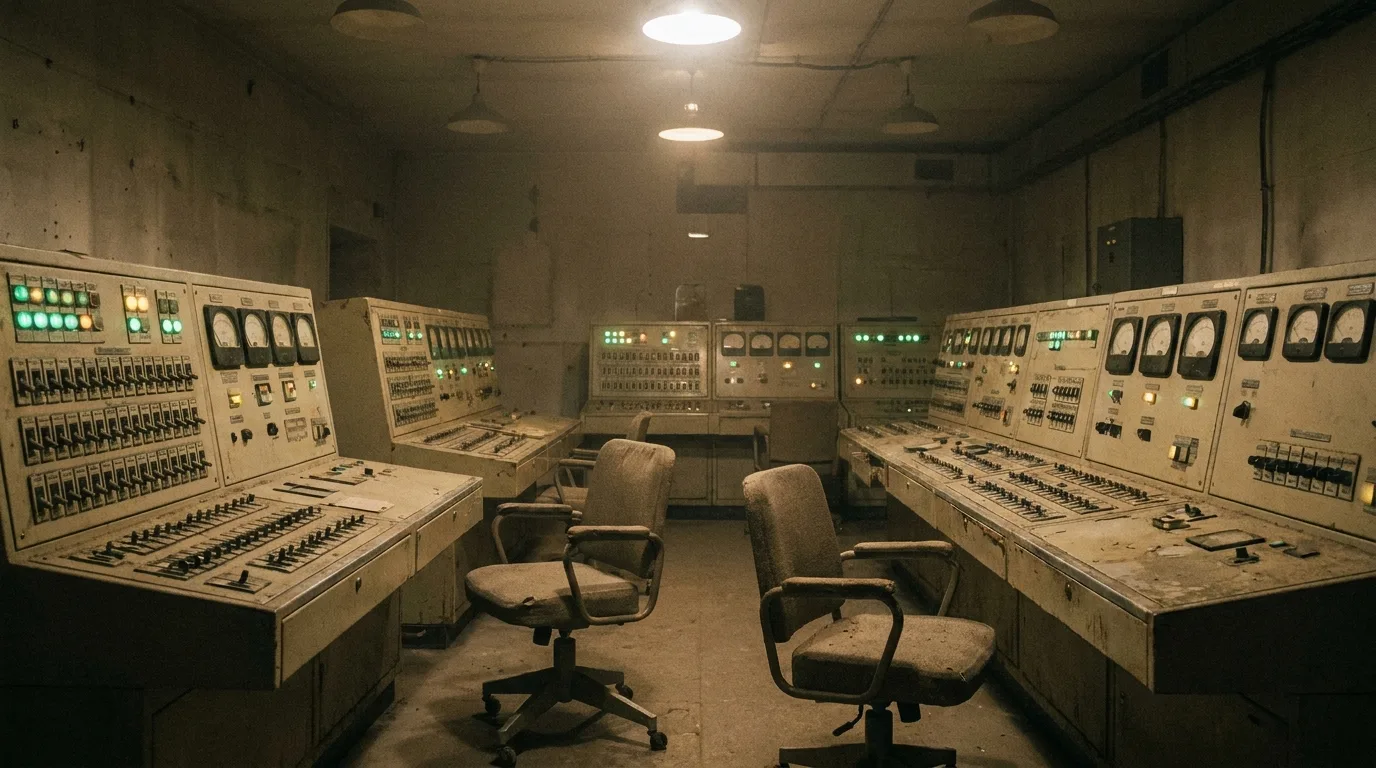
MAD describes a situation that exists only while certain conditions hold. Much of Cold War strategy was an argument about how to build, keep or escape them.
Where the idea came from
The logic is older than the name. In 1946 the strategist Bernard Brodie wrote in *The Absolute Weapon* that the chief purpose of a military establishment had been to win wars, and that from then on it must be to avert them. Once the Soviet Union tested its first bomb in 1949, the United States faced a rival that could, in time, threaten American cities as well.
Over the next two decades, three developments turned that insight into doctrine:
- Albert Wohlstetter’s 1959 essay “The Delicate Balance of Terror” argued that deterrence was not automatic. Bombers parked on exposed bases could be destroyed on the ground, so a nation’s forces had to survive an attack to deter one.
- Thomas Schelling’s *The Strategy of Conflict* (1960) described the “reciprocal fear of surprise attack” and treated deterrence as bargaining between rivals who share an interest in avoiding mutual ruin.
- In the mid-1960s Secretary of Defense Robert McNamara made “assured destruction” a planning goal. He defined it as the ability to destroy roughly a fifth to a quarter of the Soviet population and half of its industrial capacity after a Soviet first strike.
The acronym itself was a jab. Donald Brennan, a strategist at Herman Kahn’s Hudson Institute, is usually credited with coining “mutual assured destruction” in the early 1960s. He meant MAD to sound as irrational as he thought the posture was. The label stuck anyway, and “mutually assured destruction” became the common spelling.
The five conditions MAD needs
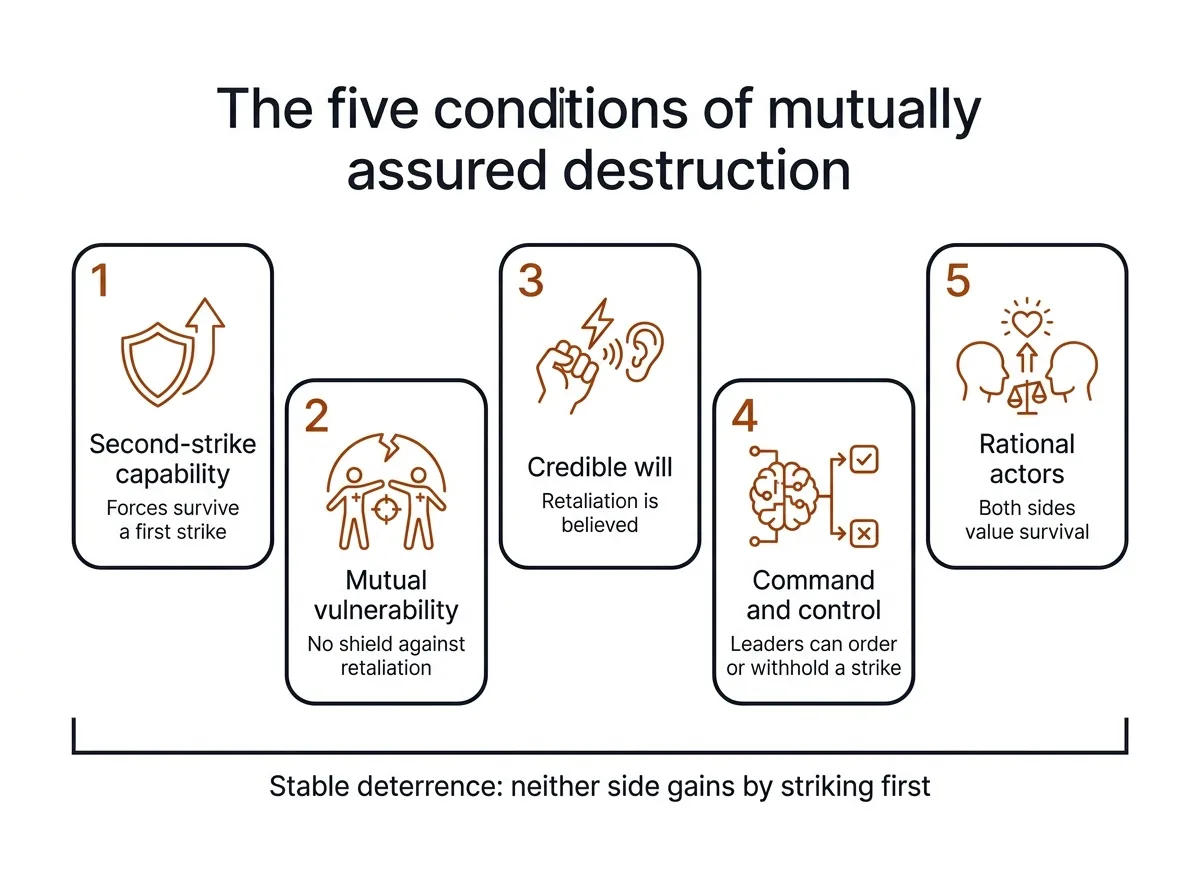
Mutual vulnerability is fragile. Strategists from both camps tend to agree that it rests on five conditions. If any one of them fails, the logic of deterrence weakens.
| Condition | What it means | Cold War example |
|---|---|---|
| 1. Second-strike capability | Enough forces survive a first strike to retaliate with devastating effect | Ballistic missile submarines hidden at sea |
| 2. Mutual vulnerability | Neither side can shield its population from retaliation | ABM Treaty limits on missile defense |
| 3. Credible will | The adversary believes retaliation would really follow | Public declaratory policy, alliance commitments |
| 4. Reliable command and control | Leaders can order, and also withhold, a strike under pressure | Hardened command posts, airborne command aircraft |
| 5. Rational, informed actors | Each side values its own survival and reads the other correctly | Hotline between Washington and Moscow (1963) |
The first condition explains the nuclear triad. The United States and the Soviet Union spread their strategic forces across intercontinental ballistic missiles in hardened silos, submarine-launched ballistic missiles and long-range bombers. An attacker would have to destroy all three legs at once, which no plan could promise.
The second condition is the counterintuitive one. Under MAD, defending your own cities is destabilizing. A nation that could shoot down most incoming missiles might be tempted to strike first, then block the weakened reply. This is why missile defense sits at the center of every debate about the doctrine.
How the conditions were tested
Several episodes put one or more of the conditions under strain.
- Cuba, 1962: During the Cuban Missile Crisis, Soviet missiles on the island threatened to shorten warning times. Afterward both sides installed the Washington-Moscow hotline.
- The ABM race, late 1960s: When Moscow began building a missile defense around its capital, President Lyndon Johnson called for arms talks. As the State Department’s Office of the Historian explains, a defense system could let one side launch a first strike and then shoot down the other side’s retaliation.
- SALT I and the ABM Treaty, 1972: After the Strategic Arms Limitation Talks, Richard Nixon and Leonid Brezhnev signed the Anti-Ballistic Missile (ABM) treaty in Moscow. It capped each side at 200 interceptors and two sites, later reduced to one. In effect, the superpowers agreed by treaty to stay vulnerable.
- The Strategic Defense Initiative, 1983: Ronald Reagan proposed a space-based shield that would make nuclear missiles “impotent and obsolete.” Critics saw a threat to condition two.
- Withdrawal, 2002: The United States left the ABM Treaty, arguing that limited defenses were needed against small arsenals and that the Cold War framework no longer fit.
Competing views
Each school below takes the risk of nuclear war seriously but proposes a different way to reduce it.
Stability theorists
For this school, mutual vulnerability is the reason the Cold War stayed cold. Once both sides hold secure second-strike forces, the thinking goes, a first strike is suicide, so leaders behave cautiously. Arms control should protect that balance, not undo it. Kenneth Waltz pushed the argument further in 1981, suggesting that the gradual spread of nuclear weapons might even make war less likely.
Warfighting and flexible response
Critics in the strategic community argued that a threat to destroy cities is not credible against a smaller attack. Would a president trade New York for a strike on a single base? From the Kennedy years onward, US planning added limited and counterforce options, and NATO adopted flexible response in 1967. Supporters say more options make deterrence believable, but skeptics reply that they make nuclear use thinkable.
Missile defense advocates
This camp holds that deliberately leaving civilians defenseless is a moral and strategic failure. Defenses can blunt accidents, rogue states and small arsenals, and they reduce the damage if deterrence breaks down. Opponents counter that rivals will simply build more offensive weapons, feeding an arms race.
Moral and disarmament critics
Philosophers, religious leaders and abolition movements argue that threatening to kill millions of civilians is wrong even if the threat is never carried out. The US Catholic bishops’ 1983 letter *The Challenge of Peace* accepted deterrence only as a temporary step toward disarmament. Scholars such as Scott Sagan add a practical worry: organizations make mistakes, and over decades a near miss may become a real one.
Is MAD still in force?
Between the United States and Russia, most analysts say the core of the doctrine still holds. Both keep large, survivable arsenals, and neither can stop a full retaliatory strike. The harder questions are new ones:
- Three-way deterrence: China’s growing arsenal turns a two-player standoff into a triangle, which complicates the stable math of the Cold War.
- New technology: Hypersonic weapons, precise conventional strikes and cyber attacks on command systems could threaten second-strike forces without a nuclear first blow.
- Regional rivalries: Pairs like India and Pakistan show that mutual vulnerability can coexist with frequent lower-level conflict, a pattern Glenn Snyder called the stability-instability paradox.
Common questions
What is mutually assured destruction in simple terms?
Two countries each have enough protected nuclear weapons that attacking the other would guarantee their own destruction, so neither strikes first.
What is second-strike capability?
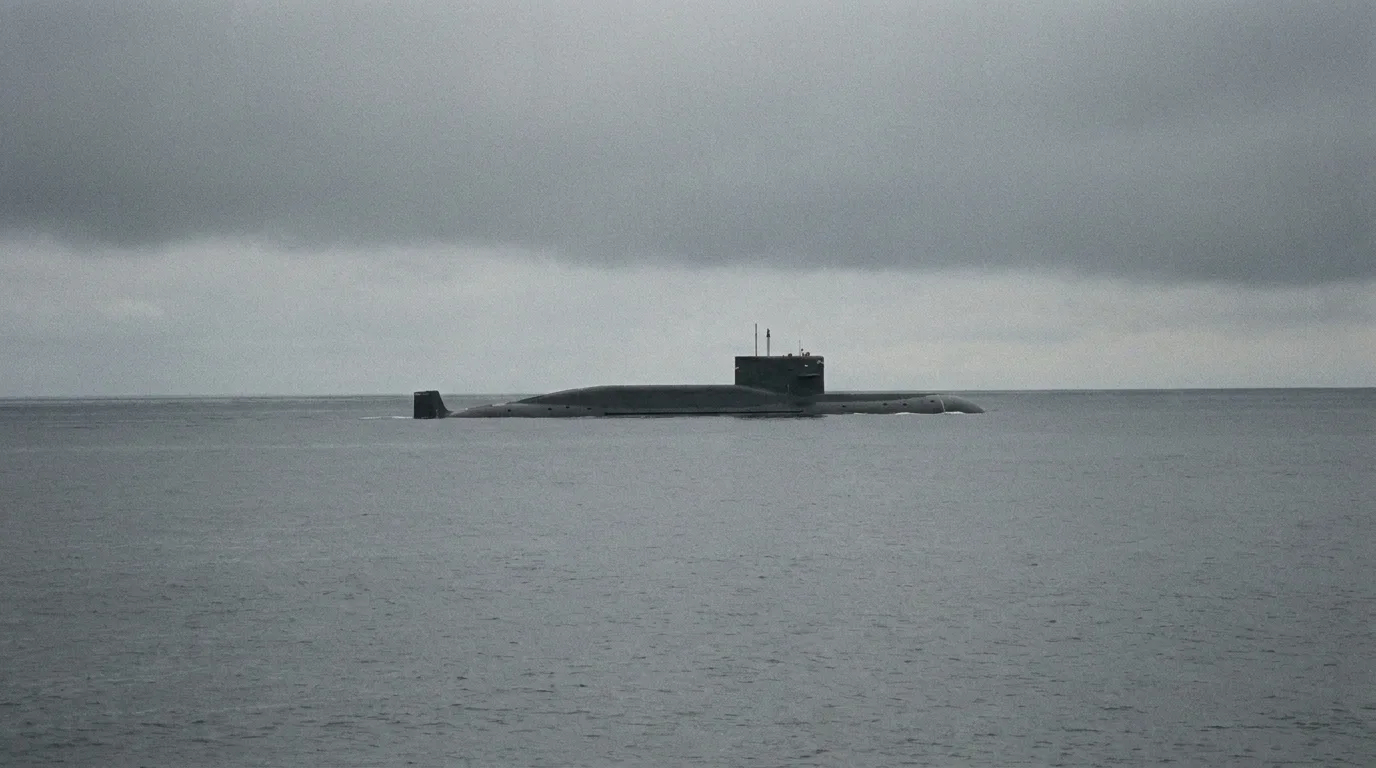
It is the ability to absorb a nuclear attack and still retaliate with overwhelming force. Submarines are the classic example because they are very hard to find and destroy.
Did mutually assured destruction prevent nuclear war?
No nuclear war broke out between the superpowers, and many historians credit mutual deterrence. Others point to luck, diplomacy and near misses such as the Cuban crisis, so the question cannot be settled by evidence alone.
What is the difference between MAD and flexible response?
MAD rests on the threat of massive retaliation against an attacker’s society. Flexible response adds a ladder of smaller conventional and nuclear options so that a threat matches the scale of an attack.
Checklist: is a nuclear relationship stable?
Analysts weighing any pair of nuclear rivals tend to ask:
- [ ] Can each side’s forces survive a surprise attack?
- [ ] Are both populations still exposed to retaliation?
- [ ] Is each side’s threat to retaliate believed by the other?
- [ ] Can leaders control their forces, and prevent accidental launch, in a crisis?
- [ ] Do the two sides have channels to communicate and avoid misreading each other?
These questions remain the usual starting point for judging whether mutually assured destruction still holds between two nuclear powers.
Sources
- Bernard Brodie (ed.), The Absolute Weapon: Atomic Power and World Order (Harcourt, Brace, 1946)
- Albert Wohlstetter, "The Delicate Balance of Terror", Foreign Affairs 37:2 (1959)
- Thomas C. Schelling, The Strategy of Conflict (Harvard University Press, 1960)
- Kenneth N. Waltz, The Spread of Nuclear Weapons: More May Be Better, Adelphi Paper 171 (1981)
- Scott D. Sagan, The Limits of Safety: Organizations, Accidents, and Nuclear Weapons (Princeton University Press, 1993)
- National Conference of Catholic Bishops, The Challenge of Peace: God's Promise and Our Response (1983)
- Office of the Historian, U.S. Department of State: Strategic Arms Limitations Talks/Treaty (SALT) I and II